
Nursing Assistant Training Program (NA)


If you're seeking a personally and financially rewarding occupation, consider the healthcare industry. Healthcare is one of the few industries that offer consistent demand, stability, and generous salaries.
Who is a Certified Nursing Assistant?
Nursing Assistant students learn the responsibilities, duties, and skills expected of CNAs in the State of Oregon. Students will be actively involved in the classroom and skills lab settings and will complete the practicum in a community nursing facility. Upon successful completion of the program, students will be issued a Certificate of Completion and be eligible to apply for certification by competency examination with the OSBN.

NA Training Program Prerequisites & Eligibility Documentation
Review Program Prerequisites & Eligibility Requirements
- Students must be at least 16 years of age to register into the Nursing Assistant program.
- The signature of a parent/legal guardian is required for all NA students who are under the age of 18, attesting that as the Parent/Legal Guardian they have read, understand, and agree the student is to abide by all the rules, regulations, policies, terms and conditions as set by Caregiver Training Institute, a Division of Bryan University, and the Oregon State Board of Nursing (OSBN).
- All students must present a current color government-issued, signature-bearing, PHOTO ID with their legal name and birth date for identity verification.
- All students must be able to read, comprehend, speak, and write in English at the
sixth-grade level or above. Students will not be allowed to have an interpreter in the classroom or clinical. - All students must certify on a Student Statement of Good Health form prior to the first day of class that they are free from contagious disease, are physically and mentally fit, are able to successfully participate in skills labs and clinicals, and perform duties of a nursing assistant safely without risk to the health and safety of others or themselves.
- All students must complete a state and national criminal background check. Some crimes may preclude clinical placement and OSBN certification/licensure. Healthcare training partners will make all eligibility and clinical placement
decisions related to screening results. - All students must sign a statement they have received the CTI Program Packet prior to registering into the school’s NA program, and acknowledge they reviewed, understand, and agree to comply with the information covered in the entire CTI Program Packet.
Which NA Class is Right for Me?
NA Faculty-led Program Certificate Classes
- The OSBN-approved NA program is comprised of 110 hours of instruction, divided into 37 hours of classroom, 33 hours of skills lab instruction, and 40 hours of instruction in a clinical setting. Two hours are also scheduled for the final exam before the start of the clinical phase of education.
- Caregiver Training Institute offers a variety of schedules for students to choose from that meet the OSBN-mandated hours of instruction.
- Classes are offered on schedules year-round, and range in length between 4-to-7 weeks.
- Options include:
- Accelerated day classes allow students to complete the program quickly. (11 weekday classes plus 40 hours of clinicals-minimum 3-4 weeks)
- Day Classes meet Monday through Thursday for 5 hours per day and give students more time to read and absorb the required chapters, review and practice skills, and prepare for exams. (4 weeks of classroom instruction plus 40 hours of clinicals (minimum of 5 weeks)
- Evening Classes also meet Monday through Thursday for 5 hours per night and give students more time to read and absorb the required chapters, review, and prepare for exams. (4 weeks of classroom instruction plus 40 hours of clinicals- minimum of 5 weeks)
-
Weekend Classes are designed for students who have commitments during weekdays and evenings that preclude them from taking other schedules. (11 scheduled Saturday and Sunday sessions plus 40 hours of clinicals-minimum of 7 weeks if clinicals scheduled during the week)
- In-person skills labs of up to 10 students per instructor on campus emphasize the importance of learning by doing.
- Supervised clinical rotations of up to 10 students at a healthcare facility, providing students with practical work experience.
- Students have the option of attending the lecture portion of the program either in a residential classroom setting or in a hybrid virtual class setting. All laboratory experiences are conducted on campus per OSBN requirements.
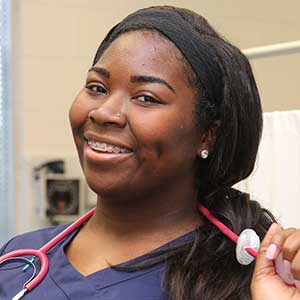
The affordable cost of training, low barriers to entry, and short-term classes are the main reasons many people choose to pursue entry-level CNA training as a starting point to a lifelong career in nursing.
Cost of Training
| Description | Price |
|---|---|
| NA Faculty-led Program Tuition (includes $150.00 non-refundable enrollment processing fee) - CTI embraces bundled, all-inclusive pricing. The program cost above includes tuition plus all of the following indicated below: | $2,200 |
| Skills Lab Supply & Career Kit (Gait Belt, Stethoscope, Blood Pressure Cuff, etc.) | Included |
| Substance Abuse (Drug Screening) & Criminal Background Check | Included |
| NA Program Textbook & Handbook | Included |
| CPR Course | Included |
| One CNA Series Micro Course (Infection Prevention, Behavioral Health, or Respiratory Care) | Included |
| Nursing Assistant Oregon Exam Prep | Included |
| Total | $2,200 |
| Description | Price |
|---|---|
| *OSBN CNA Examination Fee | $106.00 |
| **Fieldprint Fingerprint Collection Fee | $70.50 |
Total | $176.50 |
* OSBN fees are paid by the student upon completion of the program when they submit their License Application, along with their training program Certificate of Completion and processing fees, to schedule certification testing through the OSBN Online Nurse Portal at:
https://www.oregon.gov/osbn/Pages/index.aspx.
**Background check fingerprint collection fees are paid by the student after submitting the testing License Application and fees to the OSBN.
- Scrubs (must be a solid color/pattern, two sets recommended)
- Shoes (closed toe, closed heel, and non slip-soled)
- Wristwatch, with a second hand (not digital)
- Note-taking Supplies (pens, pencils, and notebook)
- Oregon Health Authority (OHA) Required Vaccines: Hepatitis B, MMR, Tdap, and Varicella (per facility requirements)
- COVID-19 Vaccination Requirement: Vaccination document or vaccine exemption form (available at CTI's office)
- Possible Facility-Required Immunizations: Influenza (during the flu season)
- TB Screening Test

Program Deadlines


Often people think it’s too difficult to become qualified to work in a healthcare setting because careers in the healthcare field have lengthy and expensive educational requirements. A perfect way to eliminate some of these obstacles is to start your career as a CNA (Certified Nursing Assistant).